Category Archives: Misc
Học Từ Lý Thuyết So Với Học Từ Kinh Nghiệm
Đầu Tư Tiền Mã Hóa #24 – Nên Mua Tiền Mã Hóa Hay Bất Động Sản?
Đầu Tư Tiền Điện Tử #17 – Phương Pháp Kiểm Soát Hệ Thống Trading Của Em Để Biết Chỉnh Sửa Chổ Nào
Làm Thế Nào Để Quản Lý Cảm Xúc Sau Khi Em Chia Tay Với Người Yêu
Living In Vietnam #6 – Why Vietnamese Car Owners Cover Their Car Roofs In Plastic
ĐẦU TƯ TIỀN ĐIỆN TỬ #16 – PHƯƠNG PHÁP ĐỂ TẠO MỘT DANH MỤC ĐẦU TƯ CHỈ SỐ TIỀN ĐIỆN TỬ
Bấm vào đây để đi đến TaiFu™ Portfolio Manager.
Nhấn vào đây để đến hướng dẫn sử dụng TaiFu™ Portfolio Manager.
Bấm vào đây để đi đến U.S. Corona Virus Stimulus Portfolio spreadsheet.
How to get a Vietnamese passport (Hộ Chiếu), National ID (Căn Cước Công Dân – CCCD) & Driver’s license For Việt Kiều’s, Vietnamese Living Outside of Vietnam, & Vietnamese Being deported.
Introduction
Last Updated: 2026-02-01
American citizenship is based on “soil” (“jus soli” in Latin or “law of the soil”). If you are born on American soil, you automatically become a US citizen and it does NOT matter where your parents came from.
Vietnam citizenship (& majority of countries in the world) are based on “blood” (“jus sanguinis” in Latin or “law of blood [DNA]”). This means that if you have “Vietnamese” in your bloodline then you are automatically a Vietnamese citizen whether you want it or not.
If you want to deny or get rid of your Vietnamese citizenship, then you have to go through the legal process to get rid of it by completing the Renouncement of Vietnamese Citizenship (Thôi Quốc Tịch).
Likewise, if you live outside of Vietnam & want to acknowledge or “recognize” your Vietnamese citizenship so you can get your Vietnamese passport, “own” Vietnamese land & property, open bank accounts, invest in Vietnamese stocks & bonds, etc. you also have to go through the legal process to REPATRIATE back into Vietnam to acquire your legal rights as a Vietnamese citizen.
1. What Is Vietnamese “Repatriation”?
I was born in the Ca Mau Province in southwest Vietnam, lived in the Vietnamese refugee camps in Malaysia for over a year then came to the US as a refugee in 1979.
In the spring of 2018, I decided to leave America for good and never come back. I wanted to relocate back to Vietnam to retire & take care of my sick mom but I could not find any reliable information online to help me go through the legal process of being able to legally go back and live as a regular Vietnamese citizen. I did not even know what this entire process is called.
Later I discovered that the process I was looking for is called “repatriation”. Repatriation is the process of legally returning a person or thing (artwork, jewelry, cremated bodies, property, etc) to their own country.
In 2018, I went thru a very painful process to repatriate back to Vietnam because I had no clue what I was doing so I had to figure out everything on my own. There were some information online but nothing that explained the complete repatriation process and all the legal documents I needed.
A successful repatriation means I now have:
- A Vietnamese passport (Hộ Chiếu)
- Registered in the House Registration Book (Sổ Hộ Khẩu)
- A Vietnamese national ID (Căn Cước Công Dân – CCCD)
- A Vietnamese drivers license
- A Vietnamese bank account (optional)
- A Vietnamese cell phone (optional)
Based on my past experience, here is a painless, step by step process to get your Vietnamese passport, House Registration Book, national ID and driver’s license.
2. Government Websites In Vietnam
When I tried to research the legal process of repatriating back to Vietnam the most frustrating part was trying to figure out which websites were legit, government owned websites and which websites are privately owned. Here are a few things you need to know when looking for a legit Vietnamese government owned website:
- Vietnam does not always have a centralized website for each government ministry or department. Sometimes they do and sometime they do not. For example, in the US you can find all the US consulate offices around the world at a centralized site called www.State.gov. In Vietnam, each consulate office and embassy has their own individual website and they do not all look the same. They do not have a similar or standardized URL or email either so do not be surprised.
- If you encounter 2 websites that appear to look like an official government website but one website looks old and ugly from the 1990’s and the other website looks modern like it was made yesterday then you can safely say that the uglier, unprofessional looking website with the outdated news on it is usually the legit government website! Both websites will contain accurate information. However, the prettier, more organized & modern looking website is usually owned by a private individual or company who makes money off of ads and documents services.
- Do not be surprised if the email from the Vietnamese embassy or consulate office comes from a gmail address instead of their website URL. This is very common.
You can download all the documents you need to complete your repatriation process at the following Vietnamese embassy & consulate websites in the USA & Canada listed below:
Vietnamese Embassy in America
URL: http://vietnamembassy-usa.org/
Address: 1233 20th St NW, Ste 400, Washington, DC 20036 USA Tel: 202-861-0737 | Fax: 202-861-0917 Consular emergency: 202-716-8666 For visa inquiries only: 202-999-6589 [email protected] (consular affairs) [email protected] (general information)
Business Hours: Embassy: 10am – 12pm, 2pm – 5pm, Mon – Fri Consulate: Mon – Fri, 9am – 12pm, 2pm – 4:30pm, Mon – Fri
Vietnamese Consulate Office in San Francisco, California, USA URL: https://vietnamconsulate-sf.org/en/home/
Address: 1700 California Str, Suite 580, San Francisco, CA 94109 Phone: (415) 922-1707 or (415) 922-1577 Fax: (415) 922-1757 Business Hours: 8:30am – 12:00pm, 2:30pm – 4:30pm, Mon – Fri
Vietnamese Consulate Office in Houston, Texas, USA
URL: https://vnconsulate-houstontexas.mofa.gov.vn/vi-vn/Trang/default.aspx
Address: 5251 Westheimer Rd, Ste 1100, Houston, TX 77056 USA Phone : (713) 850-1233 | Fax: (713) 871-0312
Email: [email protected]
Business Hours: 9am – 12pm, 2:30pm – 5pm, Mon – Fri
Vietnamese Consulate Office in New York City, New York, USA URL: https://www.vietnamconsulate-ny.org/
Address: 866 U.N. Plaza, Suite 428, New York, NY 10017 USA Phone: (212) 644-2535 or (212) 644-0831 Hotline to protect Vietnamese citizens: (929) 523-5888 | (917) 513-8688 | (646) 799-5789 Fax: (212) 644-5732
Email: [email protected]
Business Hours: 10am -2pm every Tuesday
Vietnamese Embassy in Canada
URL: https://vietnamembassy.ca/vi/
Address: 55 Mackay St, Ottawa, ON, Canada K1M2B2
Phone: (613) 236-0772
Hotline: (613) 882-6699 | (343) 777-8384 | ( 343) 777-4999 Fax: (613) 236-2704
Email: [email protected] (political, external) [email protected] (consular, citizen protection)
Opening hours for consular check-in (except Public Holidays ):
Monday: 13:30 – 16:30
Wednesday: 9:30 – 12:30, 13:30 – 16:30
Friday: 9:30 – 12:30, 13:30 – 16:30
3. Vietnamese Birth Certificate
The most important document you will need for the entire repatriation process is an original or copy of your Vietnamese birth certificate and everything else will be extremely easy. If you do not have the original or copy of your birth certificate it will take longer to prove that you have Vietnamese origin.
A birth certificate is called a Giấy Khai Sinh in Vietnamese.
If you do not have a Vietnamese birth certificate I recommend you get a copy of your parent’s birth certificate to confirm your parents are Vietnamese citizens. Afterwards, you can use your American birth certificate or the birth certificate of whatever country you were born in to prove you are their child which makes you a Vietnamese citizen as well “by blood”.
If your parents do not have a birth certificate then you will have to obtain a Certificate of Vietnamese Origin from the Vietnamese embassy or consulate office to certify that you are Vietnamese.
A Certificate of Vietnamese Origin is called a Tờ Khai Xác Nhận Là Người Gốc Việt Nam.
Some consulate offices also call it a Đơn Xin Xác Nhận Là Người Có Nguồn Gốc Việt Nam. In the past, it is was common for the same government document and application to have a different name at different offices and in different cities so do not be surprised or think you have the wrong government document.
However, on June 12, 2025, the government merged the 63 provinces in Vietnam into 34 provinces. During this process they began updating and standardizing many common government documents. Therefore, the current government documents and applications are more uniform and consistent and less confusing.
4. How To Get A Vietnamese Passport (Hộ Chiếu)
1. You can get a Vietnamese passport at:
- The immigration office at the Vietnamese Ministry of Security in Vietnam.
- The Vietnamese embassy or consulate office in your current country.
2. If you get your passport in Vietnam you will likely have to pay the coffee fees. If you do it outside of Vietnam it is much less headache, hassle, and will cost you much less in “bribes” aka “coffee fee” (it’s really just an “expedited fee”) when you do it at the embassy or consulate office in your current country.
If you live in the USA, Canada, EU, and most countries outside of Vietnam, you do NOT need to hire a lawyer or any agency to help you obtain your passport because they can not do it any faster or easier. Especially if you have a copy of your Vietnamese birth certificate, then you really do NOT need any lawyer to help you.
3. There is a Vietnamese embassy in San Francisco, Houston & Washington DC. I tried call all the offices multiple times and only the San Francisco office answers their phone. I got my passport in Houston because I lived in Dallas at the time. Only the San Francisco embassy site had the most accurate and updated info. The other embassy sites are not as current.
The Vietnamese are accustomed to doing paperwork at the government offices through a “middle man” and not online. Therefore, they do not care about building fancy government websites to give all the info to their citizens like US websites. This is being improved ever since the government created the VNeID app for everyone to easily access government services.
If u see a modern, fancy government website, more than likely its a private citizen’s website and not a government website. Most Vietnamese government websites look like they were made in the 1990’s.
4. After you complete the passport application with your Vietnamese birth certificate. The embassy will send it to the province where you were born for verification. After the verification, they will issue your passport at the embassy. Your passport will indicate that it originated at that embassy you used. This is EXTREMELY important when you come back to Vietnam to get your driver’s license. I’ll explain it later below. You do not pay the fee until your passport is complete. In Vietnamese culture, you do not pay for anything until you have the document in hand. This process is very simple & it cost me less than $400 USD.
5. How To Register Your Name Into A Vietnamese House Registration Book (Sổ Hộ Khẩu)
1. Once you arrive in Vietnam, you have about 15 days to go to your ward or commune district where you were born and where your birth certificate was issued and register your name into a document called a House Registration Book. Only people who own land with a house can have a House Registration Book. You have to find someone in your immediate family like your parents, uncles, aunts, cousins, etc. that owns land with a house and ask them to add you to their house registration book.
You MUST register into a House Registration Book immediately within 15 days or else you will run into a lot of headaches later so do not jack around going on tourism or goof off chasing the cute Vietnamese girls. Get this done first! The House Registration Book is how the government keeps track of all their citizens, for census purposes to allocate funds to each province, and for finding wanted criminals, etc.
They have been trying to do away with the physical, paper House Registration Book & old national ID’s (Chứng Minh Nhân Dân – CMND) & consolidate everything into a single national ID that has a computer chip that stores all your personal data, driver’s license, marriage certificates, legal documents, etc.
When my older brother brought my mom’s physical house registration booklet to the government office in 2021 to add himself to my mom’s house registration booklet so he can obtain his national ID, the police department kept the house registration booklet and did not give it back to him. They said he will no longer need the physical booklet since they are issuing him the new model national ID called a Căn Cước Công Dân – CCCD.
When I went to get my my national ID after my older brother got his, the police department never asked me for the physical house registration booklet either because all that info is now in the VNeID app.
The new national ID’s call the Căn Cước Công Dân – CCCD will reduce the time & cost to process legal documents. The new ID system will be more efficient because it uses a centralized, computer database that everyone can access online using the VNeID app or at any local government office so you do not have to return to the location of your home town province to do your paperwork such as car registrations, home buying, passport services, etc.
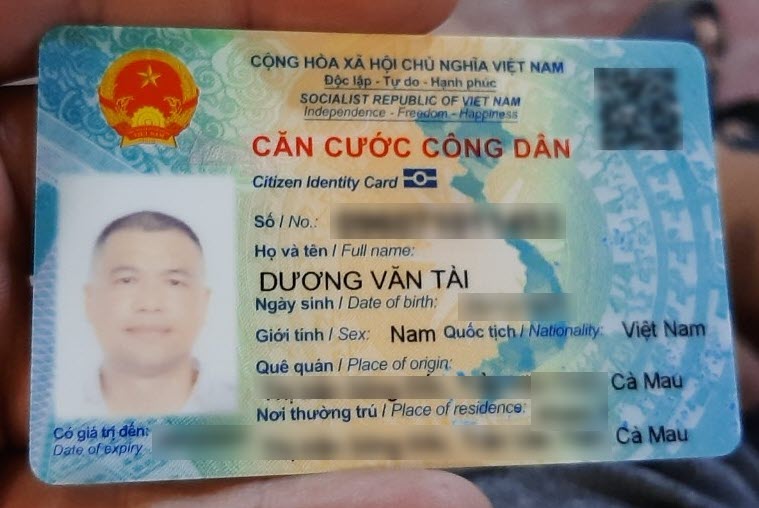
The new national ID is a work in progress & not 100% done yet. When it first came out, they printed your fingerprints on the back of the ID card. However, too many people complained it is not secure to use your ID card with your fingerprints on the back so the newest and most current versions o the national ID (CCCD) will not include your fingerprints on the back side of the card.
6. How To Get A Vietnamese National ID Card (Căn Cước Công Dân – CCCD)
1. After you are registered in the House Registration Book, they will take your picture and issue you a national ID card called a Căn Cước Công Dân – CCCD.
2. The process to get registered into the House Registration Book & get a CCCD is a few hundred US dollars. Mine was less than $400 because no one in my family was aware I had to register in 15 days so I had to pay a “late fee”. If you were born in a small, country, town you can expect the “coffee money” will be higher because the government worker has to pay the his boss and upper management to expedite the paperwork to get it done quickly for you.
3. The bigger the city, the less you have to pay. In the big cities & provinces there are “middle men” hanging out in front of all government offices to help you fill out the paperwork, do your legal documents, & collect the “coffee money”. This is standard practice because in Vietnamese culture, the people do NOT ask questions because it indicates you don’t know, if you don’t know you are uneducated, if you are uneducated you lose a lot of face. I explain more about the Saving Face culture in Vietnam here.
7. Bribes vs. Expedited Fees In Vietnam
1. In the smaller towns, villages, etc. your family will usually know someone that knows someone in the government office to help you get it done. In the west, people call the “coffee money” a “bribe”. In Vietnamese culture, it is NOT considered a bribe. It is just an “expedited fee”. If you don’t pay it there is no incentive for the government worker to do it right away, he will put your documents on the pile of applications with everyone else & you wait until it is your turn so it will take 2-3 months to get it done. If you pay an “expedited” fee, it will take less than a week to get everything done. The coffee money is very negligible compared to the speed in which you get things done so do not worry about it. What you hear about the corruption in the Vietnamese government is mostly fake news by people that do not understand Vietnamese culture.
8. How To Get A Vietnamese Car & Motorcycle Driver’s License
1. Before you come back to Vietnam, go take a 3 day motorcycle driving safety class for less than $300 in most US cities. Go take the motorcycle test & renew your driver’s license so you have the longest expiration date on your license to drive a car and motorcycle. When you arrive in Saigon (HCMC), you can go to the College of Transport (Trường Cao Đẳng Giao Thông Vận Tải) driver’s license conversion office & ask them to “convert” your US (or foreign) license to a Vietnamese license. Your Vietnamese license will have the same a) expiration and b) class of license as your US or foreign license. Any foreigner can convert their driver’s license at the College of Transport driver’s license conversion office. In HCMC, the office is here: https://goo.gl/maps/3A7HNQU1rpCnhB9n6

In 2018, when I returned to Vietnam, this is how I did it. I heard that since the government merged the 63 provinces into 34 provinces, many of the govenrment services have been streamlined so you may have to find out what the new procedures are to convert your foreign driver’s license into a Vietnamese driver’s license.
2. In Vietnam, any motorbike below175cc is called a “scooter”. Anything above 175cc is considered a “motorcycle”. 0-50cc does not require a license this is why you will see alot of kids drive 50cc or less for school. 50-175cc requires an A1 motorbike license. Anything above 175cc license requires an A2 license. If you have an A2 designation on your license it is considered more “prestigious” because only rich people can get a motorcycle license. Everyone else just gets a scooter license.
3. When you convert your license, you need to bring your most CURRENT US driver’s license & PROOF you are a resident in the foreign country such as a US Green Card or a US passport. As of 2022-01-01, they will NOT accept anything except a
US Green Card or a US passport. If you do not have a US Green Card or a US passport then you will have to pay to take a normal Vietnamese driver’s license class & pass their exams to get a driver’s license. Obviously, this will cost about 2-3 months and extra money. The cost is not significant but the time and hassle will be a headache.
4. Before covid, there is no need to pay anyone at the College of Transport any tips or “coffee money” to expedite the process of converting your US or foreign driver’s license to a Vietnamese driver’s license. It usually takes 1-2 hours to get your Vietnamese driver’s license the same day. You do NOT need to hire a service, agent or middleman to help you convert your license.
I recommend you bring someone that can speak Vietnamese and translate for you to speed up the process but it is NOT necessary. The College of Transport does lots of driver’s license conversions for foreigners and it is not a new or difficult process for them. After covid, I have heard that some Viet Kieus have to use a middle man (who normally hang out in front of the College of Transport) to help them expedite the process which will cost a little bit of coffee money.
9. Getting An APEC Card to Get Visa Free Travel
1. Also before coming back to the vietnam, apply to get the ABTC card for about $40 from US Customs. This card will allow you to go thru the Diplomat line at the airports in Vietnam & southeast asia without having to wait in line in the General Public lines which usually have about 60 people waiting in line. I have never seen any lines in the Diplomat lines using the ABTC card. You can learn more about the ABTC card program in the USA here:
https://www.cbp.gov/travel/trusted-traveler-programs/apec-faqs
2. The cost of your a) ABTC card – $40 b) US motorcycle class, test, license, etc. – $400 c) house registration – $300 d) vietnamese license – $50 e) vietnamese passport – $400, etc. should be a total of $1,190. This is the absolute max cost. The real cost should be less. I paid the highest cost cuz no one around me knew how to do it so I had to go figure it out for myself.
10. Keys To A Successful Repatriation
Hope this helps because there was no place online that explained how to repatriate a Vietnamese citizen living outside of Vietnam back into Vietnam. If you ask most Vietnamese people they do not know how to do it either.
1. FLAGS – Whatever you do, do not wear anything that has the yellow flag with 3 red stripes. That is considered the flag of the Vietnamese traitors who helped the Americans (foreign invaders) to take the land away from the Vietnamese people. Despite the fake news about Vietnam in the US, most Vietnamese people do not appreciate people who sell out their country to the enemy. The official flag of Vietnam is a yellow star on a red background.
2. CURRENCY BILLS – In the US, they do not like $100 bills because they are afraid it is a fake currency and most stores have to check the bill with a special pen before they accept the $100 bill. However, in Vietnam & Asia they prefer the $100 bill over all other bills and will give you the best exchange rate for them when you convert it to the Vietnamese Dong. If you plan on bringing cash back to Vietnam, go to a US bank and change all your money into new $100 bills before you come back to Vietnam or Asia. Do not bring any small bills because some places will not exchange them.
3. SOVEREIGNTY – People always ask me what happens if your name & ID in the US or EU is different from the name on your Vietnamese birth certificate? The Vietnamese government does NOT care about your US or western ID’s or documents. When you work on your Vietnamese documents do not waste time or make the process more confusing for the Vietnamese government officials by bringing up your US or EU documents. They do NOT care. Vietnam is its own sovererign country and they do not care about the government documents you have from another country unless they specifically ask for it.
4. ELECTRONICS – If you need any electronics like laptops, cell phones, DSLR’s, camcorders, drones, etc. make sure you buy them in the US before you come to Vietnam. You will NOT buy electronics anywhere in Asia that is cheaper than in the US.
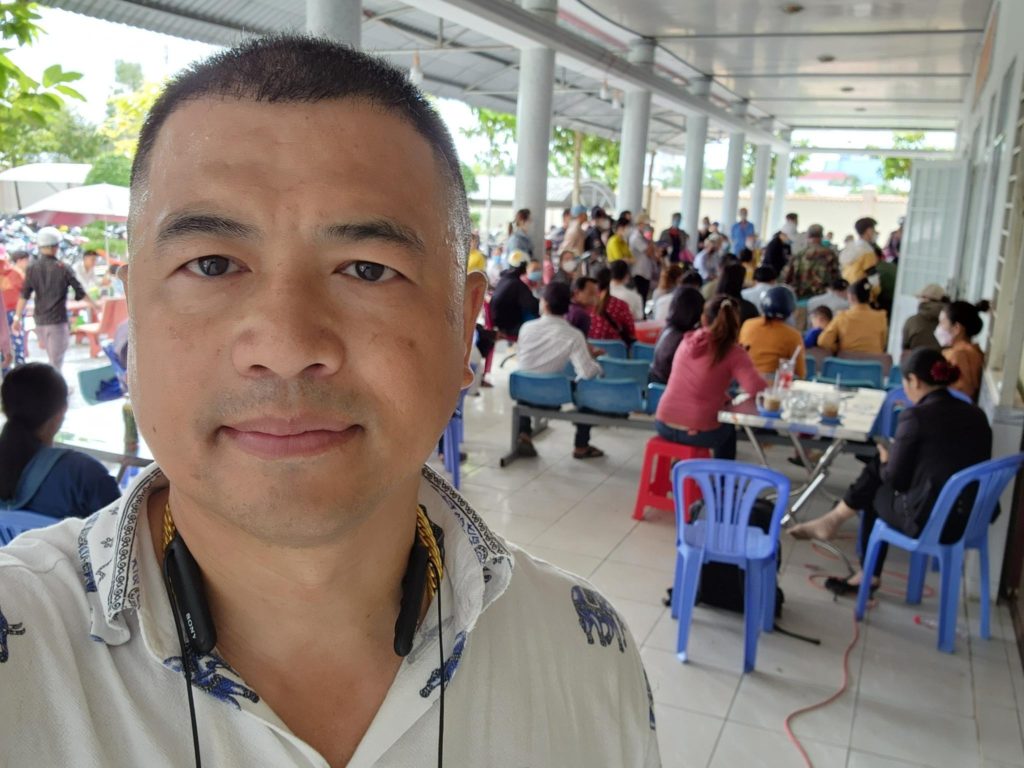
5. NATIONAL ID – After the police department took my fingerprints and picture, they said it could take about 3 months to get my CCCD ID card because they have to wait for Hanoi to print the new card. However, I received my new national ID card below in 1 month.
6. VNeID – Since the VNeID came out in 2022, you can now add your driver’s license, credit cards, bank accounts, pay bills, register your vehicles, residency, tax ID, social security, your kid’s ID’s so it is easier to confirm at the train stations and airports, and many other convenient government services. However, the downside is that you lose a lot of privacy because the app knows everything about you.
7. SIM Card – There are 3 major cellular services in Vietnam:
- Viettel – It is the biggest network and owned by the military.
- Mobifone – Private company.
- Vinaphone – State owned company.
It does not matter which service you use just make sure you tell the carrier that you want to turn on the text messages for international travel so you can get text messages from Vietnam when you are outside of Vietnam. You also need to pay them extra to keep your SIM number under your name for multiple years for as long as you can because most SIM cards will disconnect and no longer valid if you leave it unused for more than 12 months.
8. COFFEE MONEY – When I first came back to Vietnam, I knew that I had to pay “coffee money” to submit any government documents at the airport, customs office, ministry offices, etc. I do not mind paying some coffee money to expedite my documents and get them done faster. However, the biggest challenge is knowing how much to pay because there are no price lists any where in any government offices.
The best way to find out how much coffee money you need to pay is to ask the local people around the government offices. There are usually plenty of guys standing around the front door of most government offices to help you fill out the documents and submit them and all you have to do is ask them how much they charge to help you fill out the documents and submit them to the government office. They will tell you their “assistance” fee and that fee will usually include the coffee money in it already.
The “assistance fee” is always negotiable but be aware that it can not be lowered very much because they have to “buy coffee” for multiple people in the government office to get your documents done quickly. I have seen people pay as much as $130 – $217 ($3-5M VND) to get their National ID’s quickly in 1-2 weeks instead of waiting 2-4 months.
Have a smooth repatriation & hope you will really enjoy Vietnam & it’s magnificent beauty!